
Lunes a viernes: de 8:00 a. m. a 4:30 p. m.

Su búsqueda del mejor oculista de Waukegan termina con el Kraff Eye Institute. Aunque técnicamente no estamos ubicados en Waukegan, Illinois, y estamos
Most people living near the park are in their early to mid-thirties. That's a real sweet spot for LASIK. Your prescription has likely stabilized, your eyes are healthy, and you've got decades ahead of you if the procedure goes well. We hear from Logan Square residents all the time who've been thinking about it for years but never made the call.
So what holds people back?
A few things come up again and again:
Screen time concerns. This part of Logan Square draws younger professionals who work from home or commute downtown. Hours on a laptop matter. Dry eyes from contact lenses plus heavy screen use is one of the most common complaints we hear at consultations.
Rental lifestyle flexibility. Nearly 58% of housing units in this tract are renter-occupied. People move. They switch jobs. They don't always want to commit to a recovery timeline that ties them down. The reality is LASIK recovery is fast, most patients are back to normal activities within a day or two.
Not knowing if they qualify. Astigmatism, myopia, hyperopia, or some mix of all three.
We see every combination. A consultation tells you exactly where you stand.The housing stock around Palmer Square Park is older. Homes built in the late 1930s with big front windows and tall ceilings. Beautiful, but that also means a lot of natural light pouring in at odd angles, and glare sensitivity is something contact lens wearers in these pre-war two-flats and greystones deal with constantly. Vision correction can reduce that dependence on corrective lenses entirely.
Here's a scenario we see often. A renter in one of the courtyard buildings off Humboldt Boulevard comes in wearing dailies. They bike to work, they're active on weekends around the park, they're tired of the hassle. But they've read conflicting things online and don't know what questions to ask. That first conversation at our office clears up most of it in about twenty minutes.
The consultation itself isn't a commitment. It's a set of measurements and a direct conversation about your eyes. We map your cornea, check your prescription stability, look at tear production. If laser vision correction isn't the right fit, we'll say so. PRK might work better for some patients, especially those with thinner corneas. If you want to learn about LASIK eye surgery from a clinical standpoint before your consultation, the National Eye Institute breaks down how the procedure works and what candidates should know.
And Chicago's wind is a real factor here, not just a cliché. (The stretch of Kedzie near the park funnels air off the boulevard in a way that's genuinely rough on dry eyes.) Post-LASIK patients need specific aftercare instructions about airborne particles and dust, and that's something we talk through at every consultation for patients in this neighborhood.
But the biggest thing Logan Square residents tell us? They wish they'd come in sooner.
Palmer Square Park is built for people who like being outside, being active, moving through the neighborhood on foot. Contacts and glasses slow that down in ways you stop noticing until they're gone.
Para programar una consulta, llame (312) 444-1111. Para solicitar información sobre otros servicios, complete nuestro Formulario de consulta de corrección de la visión.
Programar consulta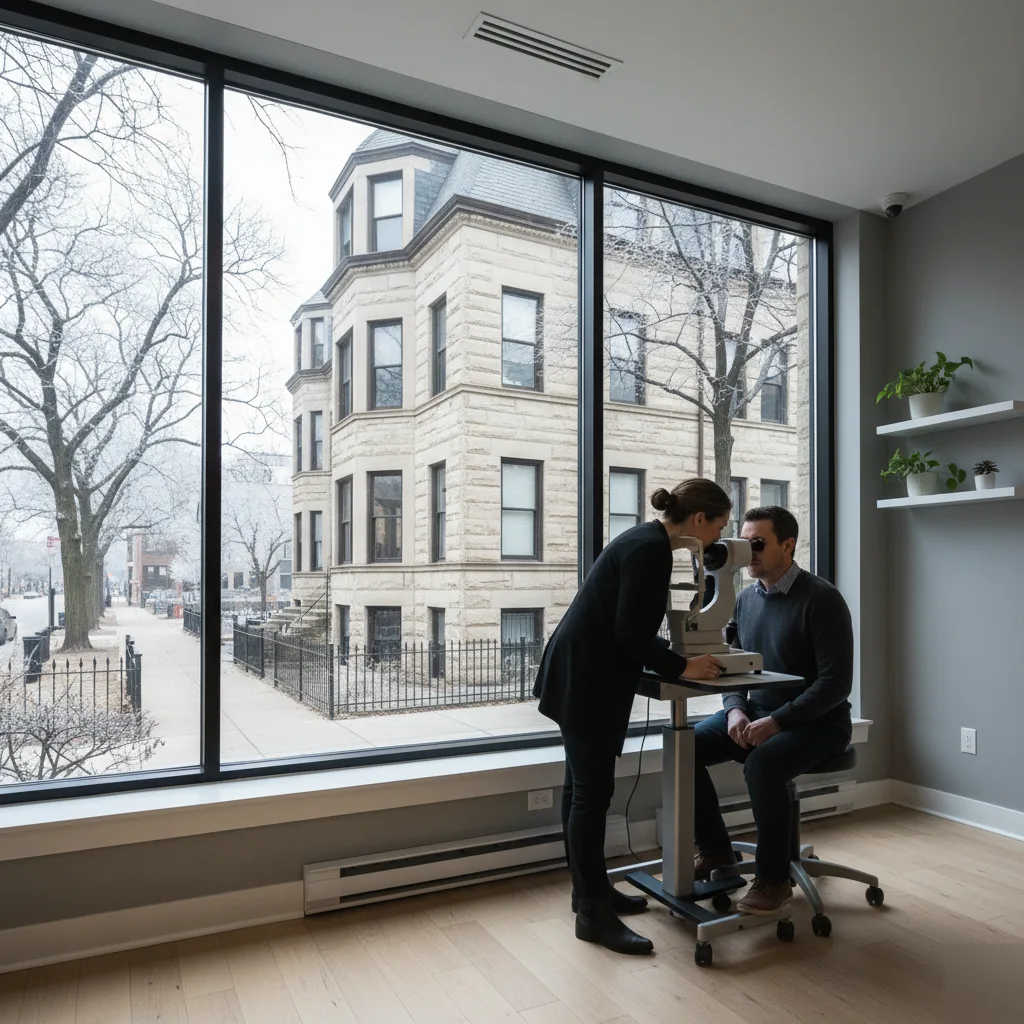
The drive from Palmer Square Park to our office at 25 E Washington St takes about 20 minutes on a normal morning. In heavy traffic, you're actually looking at closer to 15 minutes, because you're moving against the flow of outbound commuters. That's one of the better parts of a morning consultation from Logan Square.
Here's the route we'd suggest:
If you'd rather skip the car, the Blue Line makes it simple. The Logan Square station on Kedzie Boulevard is a short walk from Palmer Square Park. Take the Blue Line toward the Loop and get off at Washington. You'll be on our block.
We hear about that Blue Line connection a lot from patients in this part of Logan Square. Many of them prefer the train because parking in the Loop adds up fast, and the ride itself is roughly 25 minutes door to door. You can read or put on a podcast instead of watching brake lights on the Kennedy. For an early appointment, it's the better call.
One thing to plan for on your procedure day: you won't be driving yourself home. Your vision will be a little hazy right after, which is completely normal. Bring someone with you, or plan on a rideshare back to the Palmer Square Park neighborhood. Most patients tell us the ride home feels quick because they're just relieved it's done.
Your follow-up visit happens the very next morning. That 6.2-mile trip from Logan Square to our office is short enough that it doesn't eat your whole day. You're in, we check everything, you're out. A lot of patients grab coffee somewhere on Randolph Street before heading back up Kedzie.
We've had plenty of patients from the blocks right around the park, the stretch along Humboldt Boulevard and the side streets off Kedzie. They all say the same thing: getting downtown from that part of Logan Square is easier than they expected. The neighborhood sits close enough to the expressway that you're not grinding through miles of residential streets first.
And if your appointment falls on a weekday afternoon, you'll catch lighter traffic heading back northwest toward the park. The return trip is usually the faster leg.
Palmer Square Park sits at the fork where Humboldt Boulevard meets Kedzie Boulevard. It's shaped like a triangle, lined with old elms, and surrounded by some of the most distinct housing stock in Logan Square. Walk the perimeter and you'll see two-flats from the 1930s next to brick three-flats with carved limestone lintels. The typical home around here was built in 1938. That age shows up in the window frames, the radiator heat, the slightly uneven front stoops.
Older HVAC systems in these buildings circulate dry, dusty air, and that's not a small thing for anyone recovering from a LASIK procedure. We talk to patients about their home environment during recovery, because a drafty pre-war apartment with cast iron radiators drying out the air is a different situation than a newer build with a modern filtration system.
The people living near the park skew young. Median age in this tract is around 33. That's a crowd in their peak working years, staring at screens all day, commuting on the Blue Line, biking down Milwaukee Avenue in summer. Glasses fog up in winter. Contacts dry out on the train. Vision correction keeps coming up because it solves problems this neighborhood deals with every day.
More than half the places near the park are rentals. That mix of renters and owners creates a neighborhood that's always in motion, people moving in and settling down at the same time. But the ones who've bought here tend to stay. A two-flat on Kedzie or Humboldt is a real investment now. Homeowners in this pocket are established, with household incomes that make a procedure like this a realistic decision rather than a stretch.
-Here's what makes this stretch of Logan Square different from other nearby blocks:
-Pre-war brick construction everywhere, with big front windows that let in harsh morning light off the boulevard
-Heavy foot traffic around the park, joggers and dog walkers who need clear vision without the hassle of corrective lenses
-A younger demographic that's research-forward and reads everything before booking any medical procedure
-Proximity to Kedzie and California Blue Line stops, which means easy transit access into the Loop
We see patients from this exact area regularly. Someone in their early thirties, living in a second-floor rental on Humboldt, tired of swapping between glasses and contacts depending on the weather. They've thought about laser vision correction for a couple of years. They finally look into it, realize the consultation is straightforward. That's the patient we see most from around Palmer Square Park.
The neighborhood encourages outdoor time. The park has open green space, a playground, benches under mature trees. People read outside here, bike to the 606, walk over to grab coffee on Kedzie. All of that is easier without a lens case in your pocket.

But it's not just convenience. The housing density around Palmer Square Park means tight living spaces. Small bathrooms with bad lighting for putting in contacts. Narrow hallways where you're fumbling for your glasses at 6 a.m. These are real daily frustrations that vision correction removes in about fifteen minutes on the table.
Logan Square has changed a lot over the past decade. Palmer Square Park hasn't. The elms are the same. The boulevard system is the same. The old brick buildings still catch that low western sun in the late afternoon, and this stretch of the neighborhood knows well what the people living here are dealing with when they start thinking about vision correction, and what questions to expect when they walk through our door.
The drive from Palmer Square Park to our office at 25 E Washington St takes about 20 minutes on a normal morning — and closer to 15 minutes in heavier traffic, since you're moving against outbound commuters. If you'd rather skip driving, the Blue Line from Logan Square station on Kedzie Boulevard drops you right on our block. Most patients from this part of Logan Square prefer the train.
Yes, and it fits a renter's schedule better than most people expect. Recovery is fast — most patients are back to normal activities within a day or two. Nearly 58% of households in this area are renter-occupied, and we hear from active Logan Square renters constantly. The bigger lifestyle disruption is usually the daily contact lens routine, not the recovery.
Plan on not driving yourself home. Your vision will be a little hazy right after the procedure — that's completely normal. Arrange a rideshare or bring someone with you back to the Logan Square area. Your follow-up visit is the very next morning, so that 6.2-mile trip happens twice in two days. Keep both mornings open and light.


