
Lunes a viernes: de 8:00 a. m. a 4:30 p. m.

Beverly neighborhood residents near the Beverly Arts Center value thoroughness and expertise. Getting a cataract evaluation near Beverly Arts Center Beverly Chicago means working with Dr. Kraff at Kraff Eye Institute. Our downtown location at 25 E Washington St sits just 30 minutes from Beverly via I-57 or the Dan Ryan. You get advanced diagnostic equipment that catches cataracts early.
Residents and visitors near the Beverly Arts Center in Chicago’s Beverly neighborhood often travel to our downtown Chicago office from areas around the Beverly Arts Center, 111th Street, Longwood Drive, and nearby South Side communities. With convenient access to Interstate 57 and nearby connections to Interstate 90/94 (Dan Ryan Expressway), patients can easily travel from the Beverly area into the Chicago Loop for advanced vision correction.
Beverly residents appreciate Kraff Eye Institute for its accessible route into downtown and trusted reputation for delivering precise, high-quality vision correction results.
Early detection matters with cataracts. Dr. Kraff brings 35 years of ophthalmological experience to every evaluation. He uses state-of-the-art technology to assess your lens clarity and plan the right approach. Most Beverly residents over 60 should get annual comprehensive eye exams. Start with our free cataract consultation to protect your vision.
Para programar una consulta, llame (312) 444-1111. Para solicitar información sobre otros servicios, complete nuestro Formulario de consulta de corrección de la visión.
Programar consultaWhat cataracts actually are:
Your eye's natural lens becomes cloudy over time. Light can't pass through clearly anymore. Everything looks blurry or dim. It happens gradually, so you might not notice right away.
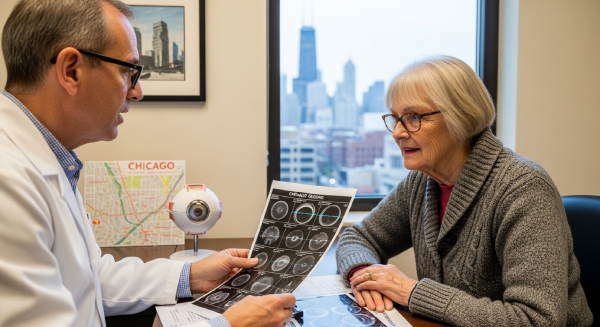
Age is the biggest factor:
Most cataracts develop in people over 60. Almost everyone gets them eventually if they live long enough. It's a natural part of aging, not a disease you did something to cause.
Types of cataracts we evaluate:
How cataracts progress:
They develop slowly. Might take years before they affect your daily life. Early stages? You barely notice. Advanced stages? Vision gets significantly impaired.
Beverly community context:
The neighborhood has an aging population. Regular screenings after 60 become critical. Catch them early, and you have more treatment options.
What happens during your evaluation:
Visual Acuity Test: You read letters on a chart. Measures how clearly you see at different distances. Takes about 5 minutes.
Slit-Lamp Examination: Dr. Kraff uses a microscope with bright light. He examines your lens under magnification. Shows exactly where cloudiness exists and how dense it is.
Dilated Eye Exam: Drops widen your pupils. Takes 15-20 minutes to work. Lets Dr. Kraff see the back of your eye completely. Checks for other problems besides cataracts.
The American Academy of Ophthalmology provides comprehensive guidance on cataract diagnosis and treatment approaches. Their research shows thorough evaluation includes multiple diagnostic tests to assess cataract severity and plan appropriate intervention. (1) Dr. Kraff follows these established protocols during your downtown assessment.
Tonometry (Eye Pressure Check): Rules out glaucoma. Quick puff of air or gentle touch to the eye. Completely painless.
Cataract Grading: Dr. Kraff assesses:
How long it takes:
Plan for 60-90 minutes at our downtown office. That includes:
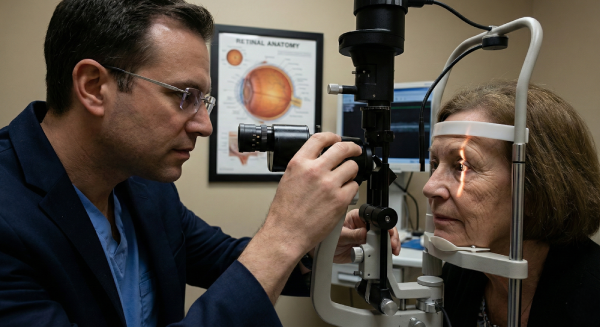
Our equipment makes a difference:
Slit-Lamp Microscope: High-powered magnification. Detailed view of lens structures. Dr. Kraff sees cataracts that other doctors might miss in early stages.
Retinal Imaging: Digital photographs of your retina. Checks for other conditions like macular degeneration or diabetic changes. Important because cataracts aren't always the only vision problem.
Corneal Topography: Maps the surface of your cornea. Critical if you need cataract surgery later. Helps choose the right replacement lens.
IOL Measurement (if surgery is considered): Calculates the exact power needed for the replacement lens. Ensures the best vision after surgery.
Why Dr. Kraff's equipment matters:
State-of-the-art diagnostic tools in our downtown office. More advanced than typical neighborhood optometry equipment. Better detection means better outcomes.
Technology advantages:
Beverly patients benefit:
You drive 30 minutes to downtown. You get access to technology that shows exactly what's happening with your vision.
Age-based guidelines:
Symptom triggers that mean evaluate now:
Driving concerns:
Increased glare from headlights? Trouble seeing lane markers? Time for evaluation. Don't wait until you feel unsafe.
Activity impact:
Vision problems limiting your hobbies? Can't read comfortably? Missing details in artwork or performances? Get checked.
Monitoring if cataracts detected early:
Dr. Kraff tracks progression over time. Regular checkups every 6-12 months. Surgery is only when cataracts truly affect your quality of life.
Beverly lifestyle considerations:
Active neighborhood with arts, culture, and community events. Don't let vision problems keep you from enjoying what Beverly offers.
Proactive approach wins:
Early detection gives you options. You can plan surgery when it fits your schedule. Rush decisions because you waited too long? Avoidable.
Take I-57 north to I-90/94 north toward downtown Chicago. Continue into the Loop, exit at Washington Street, and proceed to 25 E Washington St.
Alternative public transit:
Metra Rock Island line runs from Beverly to downtown. Get off at LaSalle Street Station. Short walk or quick CTA ride to our office. Works great for consultations.
Parking near our office:
Remember after your evaluation:
Dilated pupils affect vision for 4-6 hours. Bring sunglasses. Consider having someone drive you. Better safe than uncomfortable.

If cataracts are early:
Regular monitoring. Come back every 6-12 months. Dr. Kraff tracks how fast they're progressing. No treatment needed yet.
Prescription updates might help:
New glasses can improve vision temporarily. Stronger reading glasses. Different lens coatings to reduce glare. Buys you time before surgery.
When to consider surgery:
Do cataracts limit activities you enjoy? Can't pass the driver's vision test? Trouble reading even with new glasses? Time to discuss surgery.
Dr. Kraff's surgical expertise:
Kraff Eye Institute performs advanced cataract surgery. Modern techniques with quick recovery. Premium intraocular lens options available.
Dr. Kraff explains:
Follow-up schedule depends on severity:
Lifestyle maintenance:
Keep doing Beverly activities while you can see well. Update glasses as needed. Stay active and engaged. Surgery waits until you're ready.
Questions to ask:
How fast are my cataracts progressing? When do most patients with similar cataracts need surgery? What lens options would you recommend for my lifestyle?
Our practice is conveniently located at 25 E Washington St, Suite 606, Chicago, IL 60602, approximately 30 minutes from the Beverly Arts Center area. Beverly residents can call (312) 444-1111 to schedule a thorough cataract evaluation and discuss treatment options with Dr. Kraff.
Protect your vision with comprehensive cataract care in Chicago. Early detection prevents surprises. Schedule your cataract evaluation near Beverly Arts Center Beverly Chicago today.
To schedule a consultation, please call (312) 444-1111. To inquire about other services, please fill out our Vision Correction Consultation form.
Schedule Consultation


